
August does not lie. The house is quiet, the grandchildren are back in school and the phone rings less than it did in June. For older adults still managing a home alone, late summer is the clearest signal that something needs to change and residential care in Cedar Rapids, IA, is worth a serious look right now.
Corridor Crossing makes that shift concrete. Residents choose private one-room or semi-private two-room suites and they bring their own furniture and treasured possessions to fill them. It is a home from day one, not a temporary room, not a transitional space.
Senior living in Cedar Rapids, Iowa, means no more maintenance calls, no more cooking for one, no more chores that eat up the hours you could spend on friendships. What follows is a practical, honest look at why August is the right window to act and exactly how to do it.
Learn More About Our Residential CareWhy is August Considered An Ideal Time to Transition to Residential Care?
August offers practical advantages for moving to senior living communities. The weather is cooperative, making tours and moving easier compared to harsh winter conditions. Moving companies have better availability after the summer rush and you can see outdoor spaces and community activities at their best. Additionally, making the transition in August allows you to settle in before winter weather creates additional challenges with snow, ice and dangerous conditions.
Why August Works Better Than October
Weather cooperates in August in ways it simply will not by fall. Moving companies have better availability and more competitive pricing once the summer rush winds down. You can tour residential care communities in Cedar Rapids, IA, like Corridor Crossing, when outdoor spaces and gardens are fully alive, which gives you a far more honest picture of daily community life than a grey November visit ever could.
Residents are outside. Activities are visible. You see the community as it actually functions, not as a brochure describes it.
Why the House Feels Different Right Now
Social isolation raises the risk for high blood pressure, heart disease, cognitive decline and premature death. The house does not feel emptier because something has changed in the house. It feels emptier because the routines that filled it have gradually stopped. Senior living in Cedar Rapids, Iowa, does not just solve a logistics problem; it replaces silence with hallways that have people in them, solitary dinners with shared tables and dread about the coming winter with the confidence that comes from year-round support.
Empty House vs. Residential Care in Cedar Rapids, IA: What Actually Changes Day to Day
The gap between living alone and residential care in Cedar Rapids, IA, is not about square footage. It is about what fills your hours and who fills them with you.
Daily Life: Two Very Different Realities
Living alone follows a predictable pattern. Silence at breakfast. Meals prepared for one, eaten in front of a screen. Hours absorbed by chores that never actually end. Eating alone increases depression rates and leads to fewer main meals per day. Those eating alone relied more heavily on ready-made options and skipped meals more frequently.
Community living at Corridor Crossing runs on a different rhythm entirely. Morning routines flex around your schedule. Some residents head to fitness classes. Others take coffee on the landscaped grounds. No mandatory schedules. Only options.

What Shared Meals Actually Do
This one matters more than most people expect. Studies show that individuals eating alone report significantly higher depression rates than those sharing meals with others. They consumed fewer vegetables and skipped meals at higher rates.
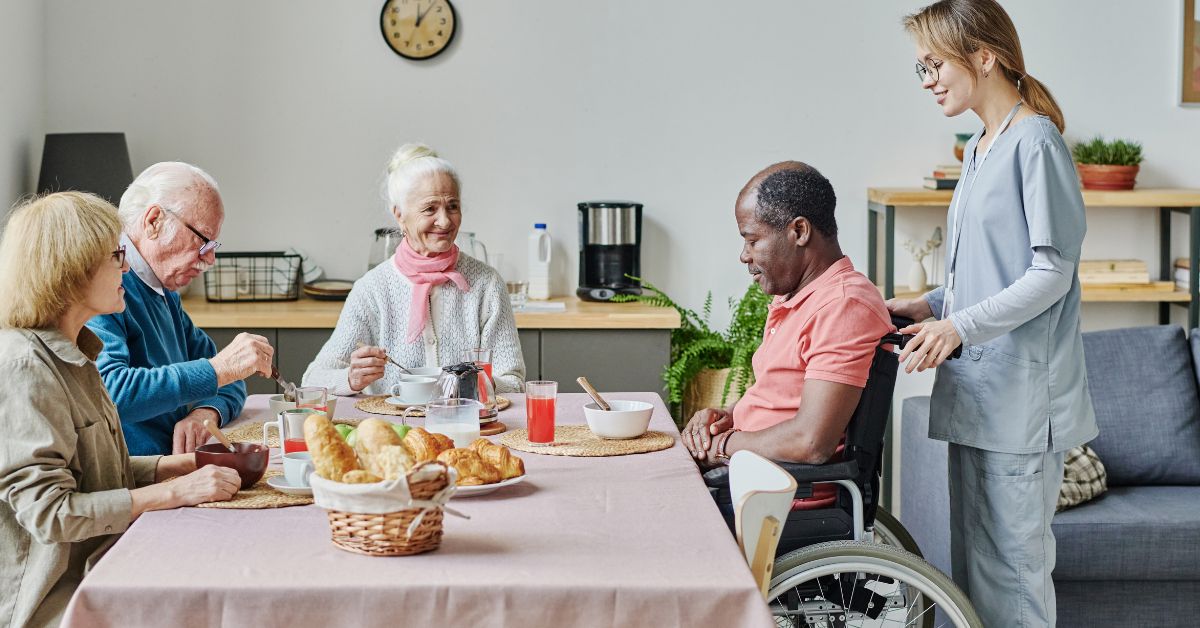
Restaurant-style dining at Corridor Crossing flips this pattern. Meals become social anchors, moments that build the kind of daily connections that genuinely improve long-term wellbeing. (Not a soft benefit. A measurable health outcome.)
Home Maintenance: Gone Entirely
Home maintenance consumed 85% (Fausset et al., 2011) of the problem-solving energy older adults spent managing difficult tasks at home, with outsourcing as the most common workaround.
Residential care eliminates the category. No repair coordination. No contractor calls. No second-guessing whether it is safe to climb a ladder to change a light bulb. Staff handles maintenance, housekeeping and grounds full stop. Your energy goes to friendships and interests instead.
Stop Waiting for Winter to Decide for You
The window is open right now. August gives you the weather, the moving company availability and the mental clarity that November will not. Residential care in Cedar Rapids, IA, at Corridor Crossing means your furniture and treasures go with you — your home moves, the burden does not.
Another winter alone is not inevitable. Another season of skipped meals, empty hallways and deferred repairs is a choice and August is the right moment to make a different one. Ready to see it yourself? Suites at Corridor Crossing fill quickly. Call (319) 448-3925 to schedule your private tour before winter makes the decision harder than it needs to be.
Book a TourFAQs
Q1. What are the main differences between living alone and living in a residential care community?
Living alone often means managing all household tasks, eating meals in isolation and handling maintenance worries independently. In contrast, residential care communities provide restaurant-style dining that encourages social interaction, eliminates home maintenance burdens and offers opportunities for activities and friendships. Residents can bring their own furniture to create personalized spaces while enjoying freedom from cooking, cleaning and repair responsibilities.
Q2. How does social isolation impact the health of older adults?
Social isolation significantly increases health risks for seniors, including high blood pressure, heart disease, weakened immune systems, anxiety, depression and cognitive decline. Eating alone increases depression rates and leads to fewer nutritious meals. Conversely, seniors who engage in meaningful activities with others tend to live longer, experience improved mood and maintain better cognitive function.
Q3. What warning signs indicate it might be time to consider senior living?
Key indicators include difficulty with daily tasks like bathing, dressing or managing medications. Other signs include unexplained weight loss, spoiled food, wearing the same clothes repeatedly, unpaid bills, missed appointments or forgetting to lock doors. Additionally, avoiding home maintenance tasks due to concerns, increased fall risks and feeling overwhelmed by household responsibilities suggests it may be time to explore residential care options.