
When you visit your senior loved one in memory care in Cedar Rapids, IA, you might wonder how to create meaningful moments together. Gratitude can become your most valuable companion during these visits. Regularly practicing gratitude reduces stress and enhances feelings of happiness—something particularly precious for older adults facing cognitive challenges. This heartfelt practice builds bridges of understanding when conversations become more difficult.
Gratitude serves as a powerful connection tool in memory care, creating meaningful bonds that transcend cognitive challenges and benefit both residents and caregivers.
How Can the Gift of Gratitude Strengthen Bonds Between My Loved One and Their Caregivers in Memory Care?
The heart of exceptional memory care lies in the connections formed between residents and their caregivers. When you witness these relationships flourish through gratitude, something beautiful happens—both your loved one and their caregivers experience genuine benefits that extend far beyond daily routines.
Four measurable benefits of strong caregiver-resident bonds
1. Reduced stress and anxiety
You know how stress feels when you’re worried about your loved one’s care. Gratitude offers remarkable relief for everyone involved. Studies show that practicing gratitude can lower cortisol levels, helping prevent the health problems that stress can trigger (Fekete et al., 2022).
2. Improved cooperation and trust
Trust forms the base of quality care and expressing appreciation helps build that trust naturally. Research shows that gratitude-focused interventions improve family-staff communication and strengthen relationships in meaningful ways. When caregivers feel valued, they communicate more openly with families, creating the transparency you want in your loved one’s care.
3. Greater emotional resilience
Caregivers who practice gratitude develop the kind of resilience that helps them handle the ups and downs of dementia care with grace. Caregivers with higher resilience scores actually make more time for essential self-care and activities they enjoy. This resilience becomes especially valuable during the more challenging phases of dementia progression.
4. Increased sense of purpose and joy
Gratitude creates something wonderful—a positive cycle that lifts everyone’s spirits. Your loved one picks up on this positivity through emotional mirroring, often reflecting the emotional tone their caregivers bring to interactions. When appreciation becomes part of the daily culture, both caregivers and residents experience more meaningful moments together and greater satisfaction with the care relationship.
What Are Simple Ways to Express Thanks to a Person With Cognitive Decline?
Use gentle touch or eye contact
Sometimes your hands can speak when words cannot. A warm hand on the shoulder, holding hands or a comforting touch on the arm conveys reassurance and appreciation. Keep your eye contact gentle rather than intense—you want to invite connection, not overwhelm.
Smile and nod with intention
Your face tells a story before you say a word. A genuine smile conveys friendliness and creates comfort. People with dementia often possess a “sixth sense” for detecting authenticity in expressions, so let your real feelings shine through. Pair your smile with an affirming nod or thumbs-up gesture—these simple signals reinforce positive feedback.
Share a photo and say thank you for the memory
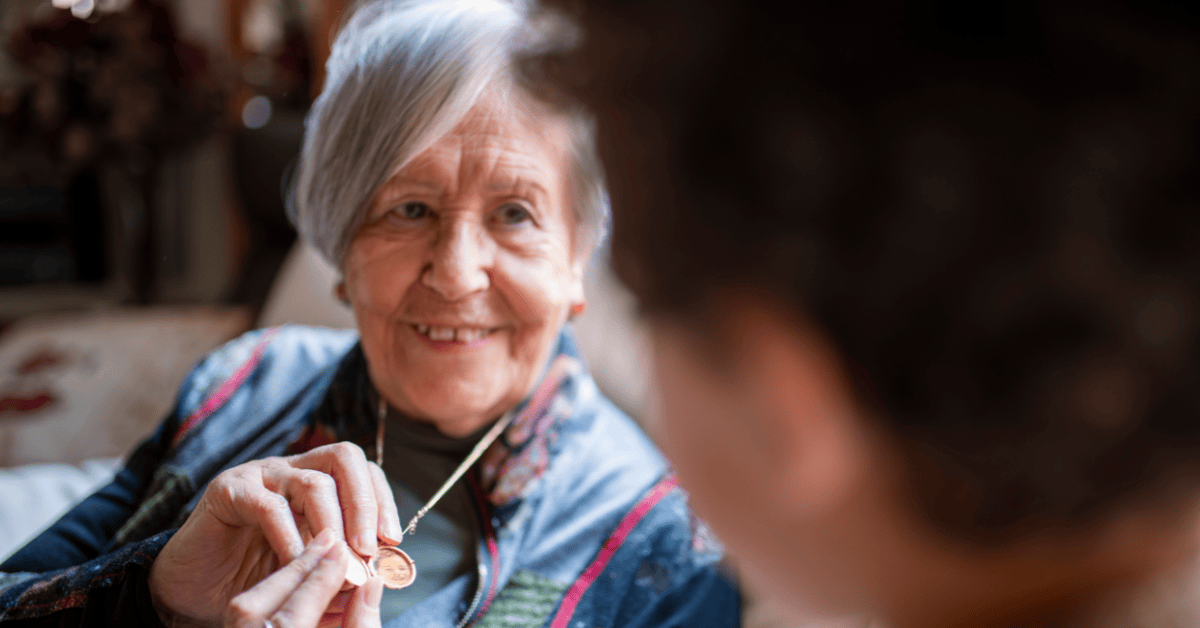
Pictures hold power that words sometimes lack. Real-life photos create stronger emotional connections than generic images. Show a cherished photograph while saying something simple like “thank you for this memory”—it can trigger meaningful engagement. Some photographs have enabled people with severe dementia to speak coherently for extended periods.

What Gratitude Activities Can Families Do During Visits?
Create a gratitude jar together
Start with something as simple as an empty mason jar or decorated container. Bring colorful paper slips and a few pens, then spend time writing down things you’re both grateful for. The beauty lies in the simplicity—your loved one can help decorate the jar or dictate their thoughts while you write. You can read these grateful moments aloud during future visits, especially on days when connection feels harder to find.
Look through old photos and share memories
Pull out those family albums or photo boxes you’ve been meaning to organize. Personal photos often trigger more vivid storytelling and word formation. Keep things simple—maybe just one or two photos per session. Let the stories unfold naturally and express gratitude for the memories they share.
Take a short walk and point out things you’re thankful for
Sometimes the best conversations happen while moving. Step outside together, even if it’s just to the community’s garden or patio. Point out the flowers blooming, birds singing or the warmth of sunshine on your faces. These walks become opportunities to practice gratitude for life’s simple pleasures while getting some gentle exercise together.
Listen to a favorite song and talk about why it matters
Music has an incredible way of reaching people, even when other connections seem difficult. Songs from your loved one’s youth (ages 10-30) typically resonate most deeply. Bring a small playlist on your phone or tablet.
End the visit with a shared thank-you ritual
Create a gentle goodbye tradition that you both can count on. Maybe it’s holding hands and sharing one thing you’re grateful for from the visit or simply saying “Thank you for spending this time with me.” A gentle hand squeeze, sharing one final gratitude statement or a brief hug provides comfort as visits conclude.
The Beauty of Gratitude
The memory care journey presents challenges for families, but gratitude offers hope and healing. Consider trying some of these approaches during your next visit. While your loved one may not remember every detail, the feelings of love and appreciation you share create lasting comfort.
Gratitude has the power to turn ordinary moments into treasured memories, building a foundation of love that reaches beyond what memory can hold. Looking for a memory care that prioritizes well-being? Contact us at 319-362-6868 to learn more about Corridor Crossing Place.
FAQs
Q1. How does showing gratitude help strengthen relationships in memory care communities?
Gratitude benefits residents through emotional mirroring . When caregivers express appreciation, it creates a positive emotional tone that the resident often reflects, reducing stress and anxiety (lowering cortisol levels). This positive cycle leads to increased cooperation, a greater sense of purpose, and more meaningful daily interactions.
Q2. What are the best non-verbal ways for me to express thanks to my loved one?
Non-verbal communication is often the most powerful form of gratitude in memory care. Focus on using gentle touch (a warm hand on the shoulder), genuine eye contact, and intentional smiles or nods. These simple gestures convey reassurance and appreciation, building trust and comfort without relying on complex verbal communication.